



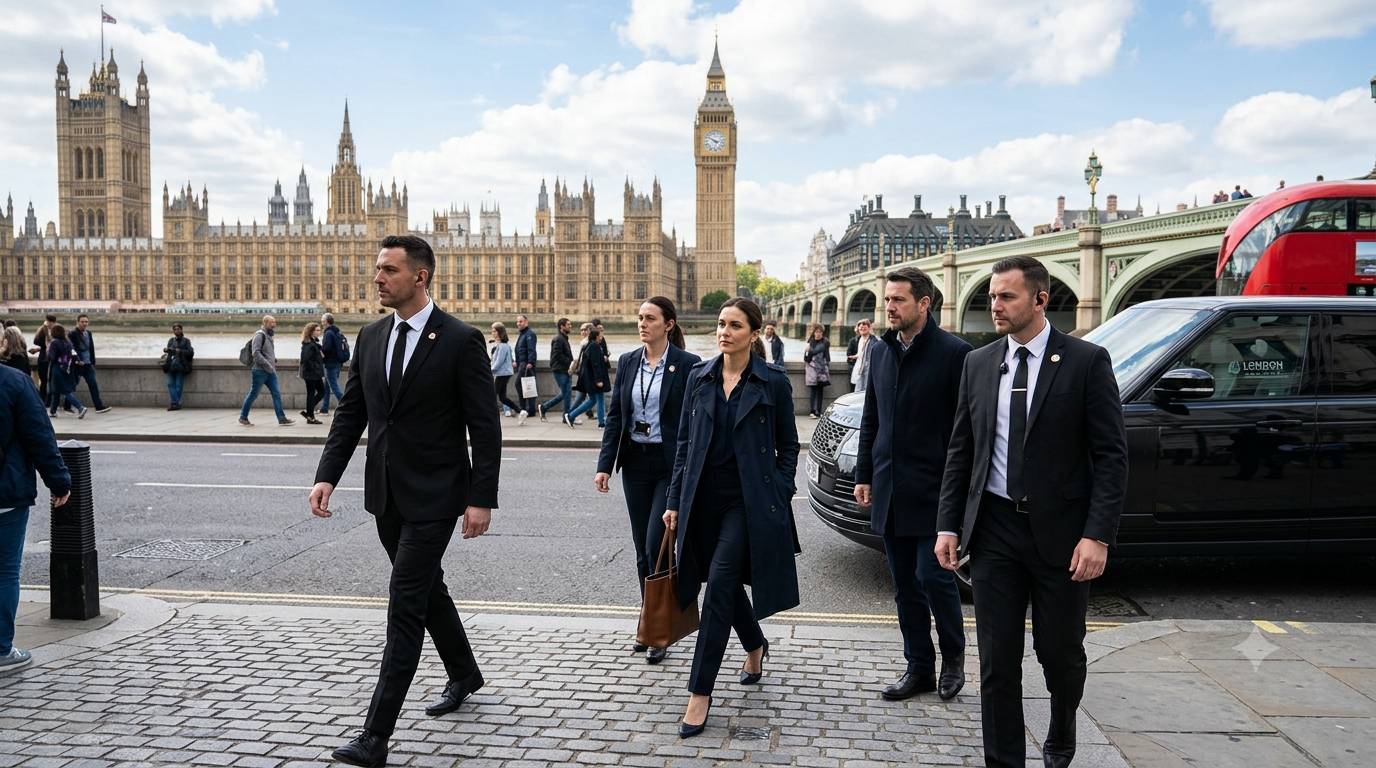
Professional security involves far more than placing a guard at a doorway. A capable agency assesses risks, plans suitable protection, manages people and technology, and responds when problems arise. Understanding these services helps London businesses, property managers, event organisers, and private clients choose security support that genuinely meets their needs.
Security needs differ widely across London, where commercial buildings, residential developments, schools, healthcare facilities, shops, construction sites, and events face distinct risks. Choosing a security agency in London should therefore involve more than comparing hourly rates or uniformed personnel. A professional provider begins by understanding the client, the location, daily activity, vulnerable areas, and possible threats. It then develops a tailored plan combining trained officers, clear procedures, appropriate technology, and responsive management. This coordinated approach helps protect people, property, assets, and operations while creating a safer environment without causing unnecessary disruption or making visitors feel uncomfortable throughout every working day.
Security Starts With a Detailed Risk Assessment
Professional security begins before an officer arrives on site. The agency should examine the property, surrounding area, entry points, operating hours, visitor patterns, valuable assets, and any previous concerns. It may also consider lone working, deliveries, emergency exits, restricted areas, and quiet periods.
These findings are used to create a practical security plan covering officer duties, patrol schedules, reporting lines, escalation routes, and emergency responsibilities. A tailored assessment prevents clients from paying for unsuitable measures while ensuring that important risks are identified and addressed from the beginning.
Manned Guarding Provides a Visible Deterrent
Manned guarding places trained officers at entrances, reception areas, internal zones, or site boundaries. They may check identification, monitor access, protect restricted areas, observe suspicious activity, and conduct scheduled patrols.
Their visibility can discourage theft, trespassing, vandalism, and disruptive behaviour before an incident develops. Professional guarding is not simply about standing watch. Officers need clear instructions, sound judgement, communication skills, and the ability to respond calmly. A capable agency also selects personnel whose experience and manner suit the environment and the people using it.
Concierge Security Combines Protection and Service
Some buildings need security that feels professional and welcoming rather than overly restrictive. Concierge and front-of-house officers combine customer-facing duties with security awareness.
They may greet visitors, verify appointments, issue passes, manage keys, monitor deliveries, provide directions, and watch reception areas for unusual behaviour. The officer must remain approachable without becoming distracted from security responsibilities. Strong presentation, discretion, patience, and knowledge of site procedures are essential. The agency should define the balance between hospitality and protection clearly so that neither part of the role is weakened.
Mobile Patrols Extend Security Coverage
Mobile patrols suit properties that do not require a permanent officer throughout the day or night. Trained personnel visit at agreed times, inspect vulnerable areas, check doors and gates, look for signs of intrusion or damage, and record their findings.
Patrol patterns may be varied to make movements less predictable. This service can support offices, residential developments, construction sites, car parks, and temporarily vacant premises. It may also include lock-and-unlock duties or alarm response where agreed. Accurate visit records show what was checked, when the patrol occurred, and whether further action was required.
CCTV Monitoring Supports Faster Decisions
CCTV is most effective when it forms part of a wider security arrangement. A professional agency may provide monitoring personnel who observe live footage, identify suspicious activity, preserve relevant information, and alert on-site officers or responsible contacts.
Monitoring improves coverage across entrances, corridors, car parks, perimeters, and areas that are difficult to supervise continuously in person. Procedures should explain what counts as a concern, who must be contacted, and how footage or incident information is handled. Technology provides visibility, but trained personnel are still needed to interpret events and respond appropriately.
Close Protection Is Planned Around the Individual
Close protection is intended for people who face elevated personal risk or require discreet support while travelling, working, attending appointments, or spending time at home. The service should begin with careful planning rather than relying only on the presence of a bodyguard.
The agency may assess schedules, locations, transport arrangements, public exposure, privacy needs, and possible vulnerabilities before deciding how protection should be delivered. Discretion is central because personal security should reduce risk without unnecessarily disrupting the client’s routine. The provider may also coordinate with drivers, household staff, venues, or existing building security.
Specialist Sites Need Tailored Security Procedures
Different environments require different methods. Event security may involve access control, crowd management, queue supervision, and restricted-area protection. Retail security focuses on loss prevention, customer safety, and incident handling.
Healthcare settings require sensitivity around patients, visitors, and vulnerable people while maintaining access rules. Schools and colleges need safeguarding awareness and controlled entry, while construction sites require perimeter checks, asset protection, and delivery monitoring. A security agency in London should adapt its personnel, procedures, and supervision to each sector instead of applying the same generic approach everywhere.
Incident Response and Reporting Create Accountability
Security officers must know what to do when something goes wrong. Professional agencies create procedures for medical emergencies, fire alarms, aggressive behaviour, unauthorised access, suspicious packages, theft, and property damage.
Officers should understand when to intervene, when to withdraw, and when to contact emergency services or site management. Written reporting is equally important. Incident reports, patrol logs, visitor records, and handover notes help clients identify recurring weaknesses and review how events were managed. Reports should be factual, timely, and easy to understand so that decisions can be made quickly.
Management and Supervision Keep the Service Reliable
Clients are not only hiring individual officers; they are relying on the agency’s management structure. Effective providers supervise personnel, arrange suitable cover, communicate changes, review performance, and remain available when urgent decisions are required.
They should have procedures for sickness, absence, shift handovers, complaints, and unexpected increases in risk. Regular contact with the client confirms whether the service is meeting expectations. Site instructions should also be updated when opening hours, layouts, tenants, equipment, or operational priorities change. Strong oversight turns separate guarding tasks into a dependable and coordinated security service.
Professional Standards Matter When Choosing an Agency
Clients should examine how an agency recruits, screens, trains, and monitors its personnel. Officers carrying out licensable duties must hold the appropriate Security Industry Authority licence, and the provider should explain how credentials are checked.
Relevant experience, communication ability, reliability, appearance, and understanding of the assigned environment also matter. The service provider used for reference states that it is an approved SIA contractor for security guarding, holds CHAS accreditation, and follows structured recruitment, screening, and training processes. It also provides private investigation, caretaking, and cleaning services where required.
Conclusion
A professional security provider offers much more than a visible deterrent. Its work begins with understanding risks and continues through planning, staff selection, access control, patrols, monitoring, incident management, reporting, and regular review. The strongest arrangements are tailored to the site and supported by clear communication between officers, managers, and the client.
Businesses and property owners should examine licensing, supervision, training, response procedures, reporting standards, and service flexibility before signing an agreement. They should also make sure the proposed plan supports daily operations rather than creating avoidable inconvenience.
Ultimately, a dependable security agency in London becomes an active protection partner, helping clients reduce risk, maintain order, reassure occupants, and respond confidently when conditions change. Choosing carefully provides not only trained personnel but also the structure, oversight, and accountability required for reliable long-term security. It also gives decision-makers confidence that emerging concerns will be identified early and handled through agreed professional procedures.